An Anti-Reflective Lens is designed to make vision clearer by reducing unwanted light reflections from its surfaces. These reflections can appear as white glare on eyeglasses, especially under office lighting, vehicle headlights, or bright phone screens. A thin multilayer coating manages this problem at the lens surface.
The science is practical. Each coating layer has a carefully selected thickness and refractive index. Together, these layers encourage reflected light waves to cancel each other. More light can then pass through the lens and reach the eye. The result may include sharper contrast, fewer halos, and less distracting glare. It can also make the lenses appear nearly invisible in photographs.
Optical engineer Dr. John E. Greivenkamp has emphasized the importance of controlling stray light in optical systems: “Stray light is light that reaches the detector in an unintended way.” That principle applies directly to everyday eyewear. Reflections do not always damage vision, but they can reduce visual comfort and clarity.
Still, an Anti-Reflective Lens is not perfect. Coatings may collect fingerprints, show blue or green reflections, or wear when cleaning is careless. Some users notice improvement immediately. Others notice only during night driving or screen use.
That difference matters.
Choosing the coating requires honest consideration of lifestyle, prescription, cleaning habits, and budget. This article explains how Anti-Reflective Lens technology works, what its layers do, and where its real benefits may stop.
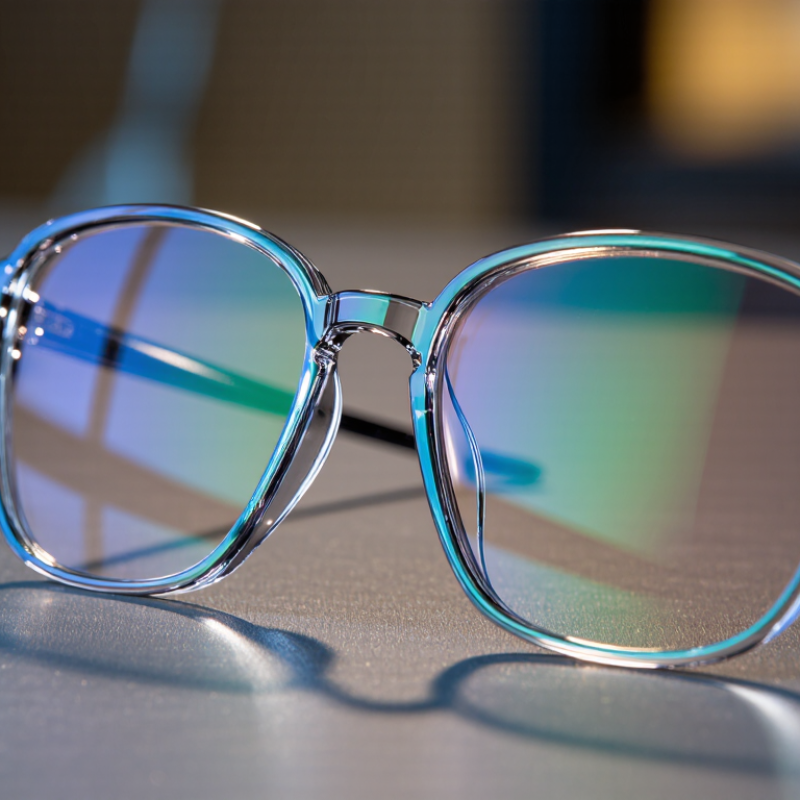
An anti-reflective lens is designed to reduce light bouncing off its surfaces. An uncoated lens can reflect about 8% of incoming light. That loss may appear as glare, especially under headlights, office lighting, or bright windows. A quality anti-reflective treatment can reduce surface reflection to under 1% under suitable testing conditions.
The coating uses extremely thin layers placed on the lens surface. These layers control how light waves interact. Reflected waves partially cancel each other, while more light passes through the lens. The result is clearer vision, fewer distracting reflections, and lenses that look less shiny in photographs. People may also notice sharper contrast when using screens or driving after sunset.
The improvement is measurable.
In optical laboratories, technicians check reflection across different wavelengths and viewing angles. Real-world performance can vary, though. Dust, fingerprints, scratches, and harsh cleaning products may reduce clarity over time. The “under 1%” figure is not magic; it depends on the lens material, coating design, and test method. I have found that users often expect glare to disappear completely, which is unrealistic. The coating reduces reflections, but it does not remove bright light itself. Proper cleaning with clean water and a soft lens cloth still matters. Some wearers may need several days to adjust to the more transparent appearance.
An anti reflective lens uses thin optical films to reduce unwanted surface reflections. Without treatment, glass can reflect several percent of incoming light. This creates glare, ghost images, and weaker contrast. You may notice it beside a bright window. The lens looks clearer, but reflections still remain.
The key process is thin-film interference across 400–700 nm, the visible light range. A coating contains extremely thin layers with carefully selected refractive indexes. When light reaches each boundary, part of it reflects. The reflected waves can meet out of phase, causing destructive interference. Their energy is redirected through the lens instead of returning toward the eye.
A single layer usually works best near one wavelength. Broad visible performance requires multiple layers, because blue, green, and red light behave differently. Each layer changes the phase and strength of reflected waves. Engineers measure reflectance across the spectrum, then adjust thickness at nanometer scale. The target is low reflection from 400 nm violet-blue light to 700 nm deep red light.
It is not perfect.
Viewing angle matters. Strong side lighting can increase reflection, and some coatings leave a faint color cast. Cleaning technique also matters, because fingerprints scatter light across the surface. My first assumption was that “anti reflective” meant invisible glass. A better description is controlled reflection, not eliminated reflection. Performance depends on wavelength, angle, coating structure, and lens material.
An anti-reflective lens reduces surface glare by guiding reflected light into destructive interference. Its performance depends on both the lens material and its coating structure. Common materials include crown glass, polycarbonate, Trivex, and high-index plastics. Glass offers excellent optical clarity, but it is heavier. Polycarbonate is lighter and impact resistant. High-index plastic creates thinner lenses, although it may show more chromatic distortion at the edges.
A typical coating system contains several functional layers. A hard coat helps protect plastic lenses from scratches. A primer layer improves bonding between the lens and the optical film. Alternating layers of high and low refractive-index materials, often metal oxides, control reflected wavelengths. A final hydrophobic layer helps water, oil, and fingerprints slide away. The process sounds precise. In practice, results can vary. Poor cleaning, heat, or surface damage may reduce performance over time. Even a well-designed coating cannot remove every reflection.
Tips: Ask an eye-care professional about your prescription, lens material, and daily environment. Night drivers may value reduced headlight glare, while outdoor users may need stronger scratch protection. Clean lenses with lukewarm water and approved lens cleaner. Dry them with a clean microfiber cloth. Avoid rough fabric and household glass cleaners. Coatings are useful, not indestructible.
An anti-reflective lens uses a thin optical coating to reduce unwanted reflections from its surface. Without this layer, overhead lights, windows, and headlights can create bright patches across your vision. The coating works through controlled light interference. Some reflected light waves cancel each other, allowing more useful light to pass through the lens.
Higher light transmission can make images appear brighter and clearer, especially in dim rooms or while driving at night. AR coatings may also improve contrast by reducing the pale haze caused by surface reflections. Fine details can look sharper, such as small print, road markings, or facial features across a room. Glare control is helpful, but it is not absolute. Strong sunlight, wet roads, and poorly positioned lights can still produce discomfort.
Tips: Clean lenses with lukewarm water and a soft lens cloth. Avoid dry tissues, shirt fabric, and household cleaners. Small scratches can scatter light and weaken the visual benefit of the coating. In my experience, proper cleaning matters more than many people expect. A coating can improve transmission, but it cannot correct an unsuitable prescription or replace sunglasses in intense sunlight. Coating performance may also vary with lens material and surface quality. This is worth checking with a qualified eye-care professional.
At normal incidence, uncoated optical glass with a refractive index of approximately 1.50 reflects about 4% of light at each surface, allowing roughly 92.2% through both surfaces. A broadband anti-reflective coating can reduce surface reflection to about 0.5% per surface, increasing transmission to approximately 99.0%.
Interpretation: Higher transmission means less light is lost through reflection. Reduced reflections also help improve contrast and decrease distracting glare, especially in bright or high-contrast viewing conditions. Values shown are representative physics-based estimates for a two-surface lens and are not brand-specific measurements.
An anti-reflective lens reduces surface glare by allowing more light to pass through the lens. Its thin, layered coating controls reflections from different wavelengths. This can improve contrast, especially under headlights, office lighting, or computer screens. It also makes the lenses look clearer in photographs and face-to-face conversations.
Durability depends on the coating quality, lens material, and daily handling. A hard protective layer can help resist minor scratches, but no coating is permanent. High heat, harsh chemicals, and dry wiping may weaken the surface over time. Rinse lenses with lukewarm water, apply a mild lens cleaner, and dry them with a clean microfiber cloth. Tissue and shirt fabric often carry tiny particles. They can leave fine marks. Use care.
Prescription design affects AR performance more than many people expect. Accurate measurements, including pupillary distance and fitting height, help place the optical center correctly. Lens curvature, thickness, and material also influence glare and visual comfort. A strong prescription may need a thinner lens design, but thinner materials can require more careful coating selection. AR cannot correct an inaccurate prescription or a poorly fitted frame. That limitation matters. In practice, even excellent lenses can feel disappointing when the frame slips or the measurements are incomplete. Regular inspections can reveal coating damage, edge stress, or changes in vision before they become distracting.
It uses thin optical films to reduce unwanted reflections from the lens surface. Glare becomes weaker. The lens may look clearer near a bright window.
Reflected waves meet at different surfaces inside the coating. When their phases oppose each other, destructive interference reduces visible reflection. More light continues through the lens.
Usually, no. One layer works best near a limited wavelength. Multiple layers help manage violet-blue, green, and deep red light from 400 to 700 nanometers.
Common choices include glass, polycarbonate, impact-resistant plastic, and high-index plastic. Glass offers clear optics but feels heavier. High-index plastic can make lenses thinner.
A hard coat helps resist scratches. A primer improves film adhesion. Alternating high- and low-index layers control reflection. A water- and oil-resistant top layer helps fingerprints slide away.
No. It controls reflection rather than eliminating it. Strong side lighting may still create glare, and a faint color cast can appear.
Yes. Reflections can increase when light strikes from the side. The coating may perform differently across viewing angles and wavelengths.
Rinse them with lukewarm water and use approved lens cleaner. Dry them with a clean microfiber cloth. Avoid rough fabric and household glass cleaners. Coatings are useful, not indestructible.
Night drivers may prefer reduced headlight glare. Outdoor users may value stronger scratch protection. The best choice depends on prescription, lens material, and surroundings. I once assumed “anti-reflective” meant invisible glass. It does not.
An Anti-Reflective Lens is designed to reduce the amount of light reflected from its surfaces, lowering typical reflection levels from about 8% to under 1%. This allows more light to pass through the lens, helping users see with greater clarity, improved contrast, and less distracting glare. The effect is created through thin-film interference: carefully engineered coating layers cause reflected light waves to cancel one another across much of the visible spectrum, including wavelengths from approximately 400 to 700 nanometers.
These coatings are built from extremely thin layers of optical materials with different refractive properties. Their performance depends on accurate layer design, lens material, and prescription geometry. A high-quality Anti-Reflective Lens can support clearer vision in bright environments, at night, and when viewing digital screens, while also making the lenses appear more transparent. Long-term results depend on coating durability, proper cleaning, and careful handling. Prescription design and fitting accuracy are equally important, because even an effective coating cannot compensate for an unsuitable lens shape or prescription.

Chroma Lenses