How to Choose the Best Colored Vision Lenses?

Time:2026-09-16 Author:Henry
0%

Choosing the best Colored Vision Lens involves more than matching a shade to your eye color. A lens may look vivid in a product photograph, yet appear softer on dark irises. Lighting, pupil size, material, and fit can change the final result. The most attractive option should also feel stable during blinking and remain comfortable after several hours.

Ophthalmologist Dr. Thomas L. Steinemann has warned, “Decorative contact lenses can be dangerous.” His statement highlights an important point: colored lenses are medical devices, not ordinary fashion accessories. A qualified eye-care professional should check your prescription, corneal shape, tear film, and suitable lens diameter. This step matters, even when you have perfect vision. Avoid products with unclear manufacturers, missing specifications, or questionable storage instructions.

Look closely. A responsible Colored Vision Lens guide should explain water content, oxygen permeability, replacement timing, and cleaning requirements. It should also distinguish daily disposable lenses from reusable designs. Never share lenses. Never sleep in them unless an eye-care professional approves it. Redness, pain, blurred vision, or unusual light sensitivity means the lenses should come out immediately.

Personal experience can be useful, but it is not a substitute for clinical advice. I once assumed a thinner lens would feel better; comfort depended more on fit and moisture balance. That assumption was incomplete. Your ideal color may also require compromise. A subtle hazel pattern can look natural, while a dense limbal ring may create a sharper effect. Choose carefully. Your eyes deserve more than a quick visual transformation.
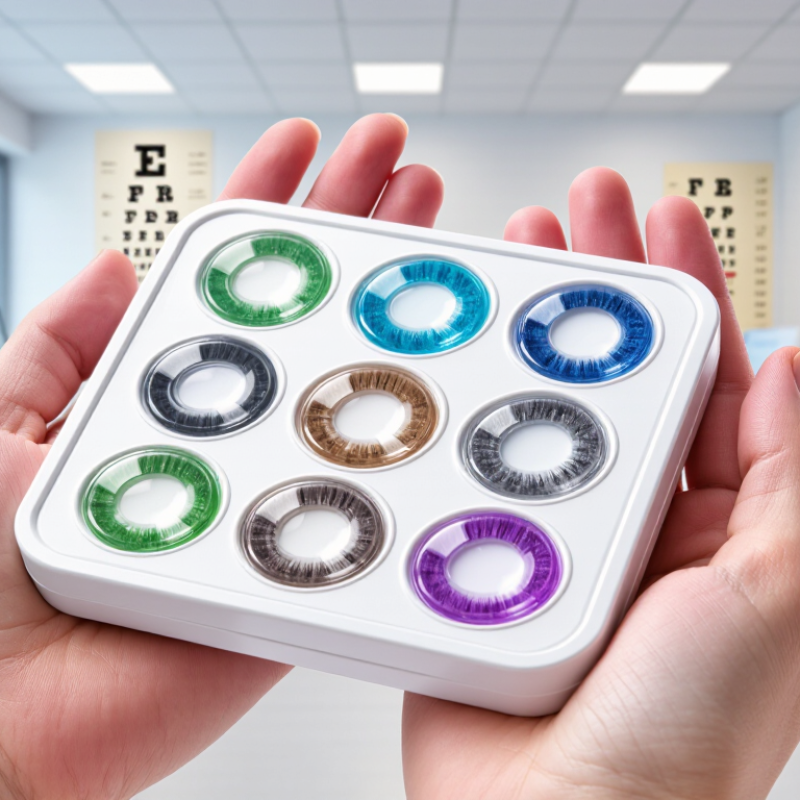
How to Choose the Best Colored Vision Lenses?

What Colored Vision Lenses Are and How They Work

Colored vision lenses are tinted glasses or contact lenses designed to change the light entering your eyes. They do not create new cone cells or cure color vision deficiency. Instead, selective filters reduce overlap between certain wavelengths, which may make some colors appear more distinct.

The National Eye Institute reports that red-green color vision deficiency affects about 1 in 12 men and 1 in 200 women. This matters because one tint cannot suit every viewer. A lens that helps separate red and green may reduce clarity in blue or yellow shades. Results also change with sunlight, indoor lighting, screen brightness, and prescription strength. Real life is less predictable.

Testing comes first. An optometrist can identify the deficiency type using standardized color tests, then compare lens options under practical conditions. Ask to view traffic-like colors, charts, and skin tones. Check comfort after several hours, not only for five minutes.

A 2018 review in the journal Optometry and Vision Science found that color-filtering lenses may improve color discrimination for some users, but evidence does not show normal color vision restoration. That distinction is important.

Choose regulated lenses with professional fitting, especially for contact lenses. Poor fit can cause dryness, irritation, or blurred vision. Be skeptical of dramatic promises. They sound attractive. Personal experience is useful, but it is not the same as clinical proof. A careful trial, documented by an eye-care professional, remains the more reliable path.

How to Identify Your Vision and Eye-Care Requirements

Choosing the best colored vision lenses begins with understanding your eyes, not selecting a shade. A colored lens may change your appearance, but it does not automatically correct blurred vision. An eye examination can measure prescription strength, corneal shape, tear quality, and overall eye health. These details matter because a lens that looks comfortable may still fit poorly.

Think about your daily routine. Do your eyes become dry after several hours near a screen? Do seasonal allergies cause itching or redness? Do you use eye makeup, work in dusty areas, or exercise outdoors? Share these details with a licensed eye-care professional. They may recommend a different material, wearing schedule, or lens design. People with sensitive eyes sometimes need shorter wear periods. Comfort should not be guessed.

Ask how to clean and store the lenses safely. Never share them, sleep in them without professional approval, or wear them when your eyes feel painful. A small mistake matters. If you notice persistent redness, light sensitivity, discharge, or sudden blurred vision, remove the lenses and seek prompt medical advice. I would also question any lens sold without an eye assessment, even if the color appears perfect. Appearance is only one part of a safe fit. Your prescription, eye surface, and ability to follow care instructions deserve equal attention.

Which Lens Colors and Tints Suit Different Visual Needs

How to Choose the Best Colored Vision Lenses?

The best lens color depends on lighting, visual tasks, contrast needs, and eye health. It is not simply a fashion choice. The National Eye Institute reports that color vision deficiency affects about 1 in 12 men and 1 in 200 women. Colored lenses may improve perceived contrast, but they cannot correct refractive errors or restore typical color vision. A comprehensive eye examination remains essential.

Gray tints preserve relatively natural color and work well in strong sunlight. Brown or amber lenses can make road edges and outdoor textures appear more distinct. However, they may alter color judgment. Yellow lenses can feel brighter in misty conditions, yet evidence for safer night driving remains limited. Darker tints may reduce available light. That trade-off is easy to overlook. Rose or copper tints may help some people with glare or light sensitivity, but responses differ widely. Clinical evidence is still developing.

Fit matters too. A lens that feels comfortable at noon may become distracting indoors. The World Health Organization’s World Report on Vision estimates that at least 2.2 billion people live with vision impairment globally, with at least 1 billion cases preventable or unaddressed. That figure supports careful screening, not guesswork. Ask an optometrist to test tint density, contrast, and color recognition under realistic conditions. Try the lenses outdoors, near screens, and in dim rooms. Personal comfort is useful evidence, but it is not the whole answer.

How to Choose the Best Colored Vision Lenses? – Which Lens Colors and Tints Suit Different Visual Needs

Lens Color or Tint Best-Suited Visual Need Typical Visual Effect Recommended Activities Key Advantages Important Limitations Overall Suitability
Gray General-purpose glare reduction and natural color perception Reduces overall brightness relatively evenly while preserving color balance Everyday outdoor use, driving in bright conditions, beach visits, and water activities Versatile; usually causes the least color distortion among dark tints; comfortable in strong sunlight Provides limited contrast enhancement in flat or overcast conditions ★★★★★
Brown Improved contrast and visual comfort in changing outdoor light Filters some blue light and can make foreground details appear more defined Driving, hiking, golf, and partly cloudy outdoor environments Good contrast enhancement; comfortable for many outdoor activities May slightly warm the appearance of colors; not automatically suitable for night driving ★★★★★
Amber Contrast enhancement in low-contrast or variable lighting Brightens perceived contrast and emphasizes edges and surface details Hiking, cycling, shooting sports, and overcast daytime conditions Can improve the visibility of contours and terrain changes Strong color shift; may feel too bright in full sun unless the lens is sufficiently dark ★★★★☆
Yellow Perceived contrast in dim daytime or hazy conditions Creates a warmer, brighter-looking view and may make some edges easier to distinguish Low-light daytime sports, cycling in cloudy weather, and recreational shooting May improve subjective visual sharpness in dull conditions Does not make night driving safer; can reduce color accuracy and should not replace proper headlights ★★★☆☆
Green Balanced comfort with moderate glare and contrast control Reduces glare while maintaining a relatively balanced view of colors Golf, general outdoor recreation, and bright variable conditions Comfortable for extended wear; can provide a balance between gray neutrality and brown contrast Less common for specialized visual needs; performance depends strongly on tint density ★★★★☆
Rose or Copper Contrast and object visibility in variable outdoor conditions Enhances warm-toned contrast and may make some objects stand out against blue or green backgrounds Trail activities, cycling, skiing, and prolonged screen or outdoor use when glare is controlled Often perceived as comfortable and contrast-enhancing; can improve visual definition for some users Color perception changes noticeably; not a universal solution for glare or low light ★★★★☆
Blue or Purple Style-focused use and moderate brightness reduction in everyday settings Provides a colored visual appearance but has no consistent advantage for visual performance Casual daytime wear and fashion-oriented use Wide aesthetic variety; may be suitable when optical performance is not the main priority May alter color recognition; dark blue tints are not recommended for driving or safety-critical tasks without professional guidance ★★☆☆☆
Clear with UV Protection Indoor use and situations requiring accurate color perception Allows high visible-light transmission while filtering ultraviolet radiation when properly treated Indoor work, laboratory tasks, digital devices, and low-light environments Preserves color accuracy and visibility; suitable when a dark tint would reduce useful light Does not provide the same glare reduction as sunglasses; UV protection must be verified on the lens specification ★★★★☆
Selection note: Tint color and darkness are separate factors. For outdoor sunglasses, look for lenses labeled 100% UV protection or UV400, and choose a darkness level appropriate for the lighting conditions. Tinted lenses should not be used for night driving unless specifically approved for that purpose. People with color-vision deficiencies, light sensitivity, eye disease, or prescription needs should consult an eye-care professional before selecting specialized tints.

How to Compare Lens Materials, Comfort, and Optical Quality

How to Choose the Best Colored Vision Lenses?

Choosing colored vision lenses requires more than matching a favorite shade. Lens material strongly affects oxygen flow, moisture retention, and wearing comfort. Soft hydrogel lenses may feel gentle initially, while silicone hydrogel materials often support better oxygen transmission. However, comfort depends on more than material alone.

Fit matters greatly. A lens should remain centered when you blink, look sideways, or read. Poor movement can cause fluctuating vision and irritation. The colored area must also align with your pupil. Otherwise, edges may appear in dim rooms. A properly measured prescription and professional fitting reduce these problems.

Optical quality deserves careful testing. Check clarity outdoors, under office lighting, and during evening activities. Notice halos, glare, or reduced contrast. No material performs perfectly for every wearer. A lens that feels comfortable for one hour may become dry later. That detail is easy to miss.

Pigment placement can influence sharpness, especially when the pupil expands in low light. Ask an eye-care professional to assess tear-film health, corneal condition, and lens movement. Replace lenses according to the recommended schedule, even when they still look clean. Never share them. I once underestimated how much blinking patterns affect comfort; real-world use can reveal issues that a short fitting cannot.

How to Choose the Best Colored Vision Lenses?

Compare common lens-material categories by oxygen permeability, typical comfort potential, and optical quality. Scores use a five-point comparative scale based on established material characteristics; individual results vary with lens design, fit, wearing time, and eye health.

How to Select, Fit, Wear, and Maintain Colored Vision Lenses

How to Choose the Best Colored Vision Lenses?

Selecting colored vision lenses begins with eye health, not appearance. The U.S. FDA classifies contact lenses as medical devices, including decorative lenses. Therefore, an eye examination and a valid prescription are essential. The CDC reports that about 45 million Americans wear contact lenses. It also links poor lens habits with serious eye infections and millions of healthcare visits. A qualified eye-care professional should measure your prescription, corneal shape, tear film, and lens movement. Color intensity can affect comfort and visual clarity. A beautiful lens is not automatically a suitable lens.

Fitting matters during every trial. The lens should move gently when you blink, without feeling sharp, dry, or loose. Follow the recommended wearing schedule, and never sleep or swim in lenses unless specifically approved. Wash and dry your hands before handling them. Use fresh approved solution, replace the case regularly, and never add new solution to old liquid. The British Contact Lens Association stresses hygiene, replacement schedules, and professional follow-up as core safety practices. A small shortcut can create a large problem. I would also question any lens that feels comfortable at first but causes redness later.

Tips: Begin with short wearing periods. Carry glasses as a backup. Remove lenses immediately if pain, light sensitivity, discharge, or blurred vision appears. Do not share lenses, even briefly. The CDC recommends prompt professional care for unusual symptoms. Some advice sounds obvious, yet daily habits are where many users become careless.

FAQS

Can colored vision lenses correct blurred vision automatically?

No. Color changes appearance, but prescription correction requires an eye examination and suitable lens strength.

Why is an eye examination necessary before choosing lenses?

An examination checks prescription strength, corneal shape, tear quality, and overall eye health. Appearance alone is not enough.

How should colored vision lenses feel when they fit properly?

The lens should move gently when you blink. It should not feel sharp, loose, or unusually dry.

How long should beginners wear colored vision lenses?

Begin with short wearing periods. Increase time only according to professional advice and your comfort.

What hygiene steps should users follow?

Wash and dry your hands before handling lenses. Use fresh approved solution and replace the storage case regularly.

Can I sleep, swim, or share colored vision lenses?

Do not share lenses. Avoid sleeping or swimming in them unless a qualified eye-care professional specifically approves it.

What symptoms mean I should remove the lenses?

Remove them immediately for pain, persistent redness, light sensitivity, discharge, or sudden blurred vision. Seek prompt medical advice.

Do daily habits affect lens comfort?

Yes. Screens, allergies, eye makeup, dust, and outdoor exercise may increase dryness or irritation. Comfort can be misjudged.

Should I carry glasses when wearing colored vision lenses?

Yes. Keep glasses nearby as a backup. I might trust the lenses too much, and that judgment can be wrong.

What should I question before buying colored vision lenses?

Be cautious when lenses are sold without an eye assessment. A perfect color may hide an unsuitable fit.

Conclusion

Colored Vision Lens can enhance or alter the appearance of the eyes while supporting specific visual preferences when chosen carefully. Understanding how these lenses work is the first step, followed by identifying your prescription, eye sensitivity, lifestyle, and overall eye-care requirements. Different colors and tints may provide varying levels of contrast, brightness control, or visual comfort, so the best option depends on your daily environment and individual needs.

When comparing lenses, consider breathable materials, optical clarity, moisture retention, durability, and long-term comfort rather than appearance alone. Proper selection and fitting should be guided by a qualified eye-care professional, especially when vision correction is required. Users should follow recommended wearing schedules, handle lenses with clean hands, store them correctly, and maintain consistent cleaning and replacement practices. With suitable guidance and responsible care, colored lenses can offer a comfortable, practical, and visually appealing experience.

Henry

Henry

Henry is a dedicated marketing professional with a profound expertise in the company's offerings. With years of experience in the industry, he possesses an impressive understanding of the market dynamics and consumer behaviors that drive success. Henry is committed to sharing his insights through......