A Rigid Gas Permeable Lens is a small, durable contact lens designed to allow oxygen to reach the cornea. Unlike soft lenses, it maintains its shape over the eye. This stable surface can provide sharper vision for people with astigmatism, keratoconus, or irregular corneal curves. The result may feel remarkably clear.
The lens is usually made from advanced oxygen-permeable materials. It rests over the tear film rather than molding closely to the cornea. During an eye examination, an optometrist measures the corneal shape, prescription, tear quality, and eyelid movement. These details guide the fitting process. A well-fitted lens should center properly and move slightly with each blink.
Comfort can take time. This matters.
New wearers may notice awareness, watering, or mild irritation during the first several days. Many users adapt gradually through a structured wearing schedule. However, persistent pain, redness, light sensitivity, or blurred vision requires prompt professional advice. A lens that feels “almost right” may still need adjustment.
In my view, the main appeal is not simply sharper vision. It is the precision of the fit and the possibility of stable optical performance. Still, rigid lenses are not ideal for everyone. Handling, cleaning, and regular follow-up demand discipline. Care routines also vary by material and practitioner instructions. Never use tap water or saliva on a lens. Professional guidance remains essential, because individual eye health can change. This article explains how a Rigid Gas Permeable Lens works, who may benefit, and what practical limitations deserve careful consideration.
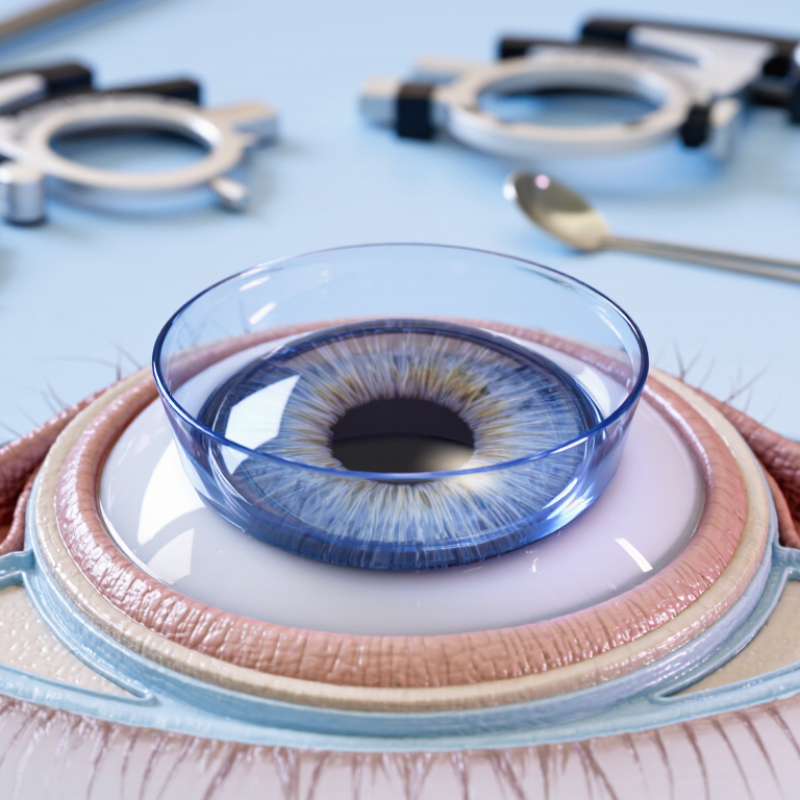
What Is a Rigid Gas Permeable Lens?
Definition and Classification Under ISO 18369-1
A rigid gas permeable lens is a firm contact lens that allows oxygen to pass through its material. It keeps a stable shape on the eye. This stability can support precise vision correction, especially for astigmatism or irregular corneas. Unlike older rigid lenses, modern RGP materials are designed to reduce oxygen restriction during wear.
ISO 18369-1 provides vocabulary and a classification framework for contact lenses. Under this framework, an RGP lens is understood as a rigid contact lens with gas-permeable characteristics. The standard also separates lenses by material behavior, flexibility, design, and intended terminology. These details help laboratories, clinicians, and manufacturers describe lens specifications consistently. Classification does not replace a professional fitting assessment.
A practical fitting record may include lens diameter, back optic zone radius, center thickness, and edge design. These measurements influence movement, comfort, and tear exchange. A lens may look perfectly clear on a specification sheet but still feel unstable during blinking. That is where real-world observation matters. The term “RGP” also does not identify one universal material or performance level. Oxygen transmission, surface treatment, and lens geometry can vary considerably. This distinction is easy to overlook.
Under ISO 18369-1 terminology, a rigid gas permeable (RGP) contact lens is a rigid contact lens made from a material that permits oxygen to pass through the lens. The chart compares the defining classification characteristics of rigid gas permeable, conventional hard, and soft contact lenses. “1” indicates that the characteristic applies; “0” indicates that it does not.
A rigid gas permeable (RGP) lens is a firm, shaped lens that covers the cornea. It provides clear vision through a stable optical surface. Unlike soft lenses, it does not conform closely to the eye. A thin layer of tears sits beneath it. That tear layer can improve vision quality, especially when the cornea has an irregular shape.
RGP materials are judged partly by oxygen performance. Dk describes how easily oxygen moves through the lens material. It is an intrinsic material value, commonly reported in barrer. Dk/t measures oxygen transmissibility through the finished lens. The “t” represents lens thickness, so a thinner design can transmit more oxygen than a thicker lens made from the same material. A high Dk value alone is not enough.
In daily wear, eyelid movement, tear exchange, lens fit, and surface wetting also affect corneal oxygen supply. A lens with a high Dk/t may still feel uncomfortable if its edge design or movement is unsuitable. Deposits can also reduce surface wetting over time. The numbers are useful, but not perfect. Laboratory measurements may differ from real wearing conditions. I would not choose an RGP lens by Dk alone. A qualified eye-care professional should assess material, thickness, fit, wearing schedule, and corneal response together. Even small changes in lens design can influence comfort by the end of the day.
A rigid gas permeable lens is a firm, breathable lens that keeps its shape on the eye. Its stable surface can provide crisp vision, especially when the cornea has an uneven shape. Unlike soft lenses, it does not fold with each blink. A thin tear layer forms between the lens and cornea, helping smooth small surface irregularities. Comfort may improve with consistent wear, but adaptation often takes patience.
Lens geometry strongly affects movement, comfort, and visual performance. Many RGP lenses measure about 8–10 mm across. Smaller diameters may move more freely, while larger designs can offer broader coverage. The base curve describes the lens’s central curvature. A steeper curve sits more closely; a flatter curve allows more movement. However, this simple rule can mislead. Corneal shape, eyelid pressure, tear quality, and prescription must also guide fitting. An eye-care professional should evaluate these factors using measurements and an on-eye assessment.
Tips: Never choose a base curve from diameter alone. During a fitting, notice whether the lens feels sharp, excessively mobile, or trapped beneath the eyelid. Blinking should create controlled movement, not constant displacement. Bring your actual lenses to follow-up visits. Real wear reveals details that measurements may miss. Even experienced wearers can overlook mild dryness or intermittent blur. Report those changes rather than adjusting the lens independently.
A rigid gas permeable lens allows oxygen to reach the cornea while maintaining a stable optical surface. During clinical fitting, movement matters as much as comfort.
1–2 mm
of movement with each blink
A common starting target is 1–2 mm of movement with each blink. This range supports tear exchange without excessive lens awareness. It is a guide, not a rigid rule.
Fluorescein reveals the relationship between the lens and cornea. A broad green area may indicate central pooling, suggesting a steep fit. Excessive bearing in the center can indicate a flat fit. Ideally, the pattern shows gentle alignment, with limited pooling and no harsh edge bearing.
The examiner should observe several blinks, not one frozen moment. Small bubbles, debris, or unstable vision can change the interpretation.
The 2023 International Contact Lens Prescribing Survey reported that rigid lenses remained a meaningful part of specialty prescribing, particularly for irregular corneas and demanding visual needs.
Professional fitting literature also emphasizes evaluating lens centration, tear exchange, and ocular surface response together. These details are easy to separate incorrectly.
I have found that a lens appearing “well centered” can still move poorly. The endpoint is not perfectly mechanical. Patient feedback, fluorescein behavior, and slit-lamp findings must agree.
Some eyes need less movement because of sensitivity or lid anatomy.
Others require more movement to maintain a healthy tear layer.
A careful refit may be necessary when comfort declines after several hours.
What Is a Rigid Gas Permeable Lens?
Rigid gas permeable lenses are small, firm lenses that rest over the cornea. They preserve their shape during blinking. This can provide sharper vision for astigmatism, keratoconus, or irregular corneal surfaces. Their smaller size also allows tears to circulate beneath the lens. That airflow supports oxygen delivery, but comfort does not arrive instantly. A tiny eyelash can feel surprisingly large.
Adaptation often takes several days to a few weeks. Your eye-care professional may recommend gradually increasing wearing time. Follow-up visits matter because discomfort can indicate dryness, a poor fit, or surface damage. Do not push through persistent pain, redness, light sensitivity, or blurred vision. Removing the lens may be sensible, even when your schedule feels inconvenient. Adaptation is not always smooth, and that is worth acknowledging.
Wash and dry your hands before handling the lenses. Rub and rinse them with the prescribed care solution. Never use tap water, saliva, or homemade mixtures. Water can expose lenses to harmful microorganisms. Store each lens in fresh solution and keep the case clean and open to air-dry. Replace the case regularly, according to professional advice. Replacement timing depends on wear, deposits, scratches, lens stability, and examination results. A lens can look clear while its surface becomes less comfortable. Routine checks help confirm whether replacement or adjustment is appropriate.
| Dimension | Typical Information | Practical Details |
|---|---|---|
| Definition | Small, firm contact lenses made from oxygen-permeable materials | Rigid gas permeable (RGP) lenses maintain their shape on the eye while allowing oxygen to reach the cornea. They are custom-fitted by an eye-care professional. |
| Common Uses | Myopia, hyperopia, astigmatism, and irregular corneal conditions | RGP lenses can provide clear vision when the corneal surface is uneven, including some cases of keratoconus or corneal irregularity. Suitability depends on an eye examination and professional fitting. |
| Vision Quality | Often provides sharp, stable vision | The firm lens surface can create a regular optical surface over the cornea. Vision may be especially consistent for people whose prescription includes significant or irregular astigmatism. |
| Oxygen Transmission | Designed to transmit oxygen to the cornea | Modern RGP materials are oxygen-permeable, but oxygen performance depends on material, thickness, fit, wearing time, and lens care. Follow the prescribed wearing schedule. |
| Initial Comfort | Usually less comfortable at first than soft lenses | RGP lenses may feel noticeable because they are smaller and firmer. Mild awareness, blinking, or extra tearing can occur during the early adjustment period. |
| Adaptation Time | Commonly several days to a few weeks | Many wearers improve gradually with consistent, professionally prescribed use. Adaptation varies; significant pain, marked redness, light sensitivity, or reduced vision requires prompt professional assessment. |
| Handling Skills | Requires careful insertion, removal, and cleaning | Wash and dry hands before handling. Avoid fingernails when touching the lens, and use the technique demonstrated by the eye-care professional to reduce damage and contamination. |
| Daily Cleaning | Clean and disinfect after each wearing period | Use only the care products recommended for the specific lens material. Rub and rinse as directed, store the lenses in fresh solution, and never use tap water or saliva on the lenses. |
| Storage Case Care | Keep the case clean and replace it regularly | Empty used solution after every use, rinse the case with the recommended solution when instructed, allow it to air-dry, and replace the case at the interval advised by the care professional or solution instructions. |
| Water Exposure | Keep lenses away from tap water, swimming pools, hot tubs, and showers | Water can introduce microorganisms and may cause serious eye infections. Remove lenses before water exposure unless a professional has provided specific, appropriate instructions. |
| Wearing Schedule | Increase wearing time only according to professional guidance | Do not sleep in RGP lenses unless specifically prescribed. Avoid extending wear when the eyes feel dry, irritated, painful, or unusually red. |
| Replacement Practice | Replace according to condition and professional recommendation | RGP lenses may last longer than many soft lenses, but they are not permanent. Replacement timing depends on scratches, deposits, warping, surface damage, prescription changes, fit, and material performance. |
| Inspection Before Use | Check the lens every time before insertion | Do not wear a lens that is cracked, chipped, scratched, cloudy, misshapen, or contaminated. A damaged lens can irritate the eye or affect vision. |
| Follow-Up Visits | Attend fitting and routine eye-care appointments | Follow-up visits help assess corneal health, lens movement, comfort, vision, deposits, and prescription accuracy. The schedule should be individualized by the eye-care professional. |
| Key Benefits | Durable, reusable, and optically stable | RGP lenses can offer clear vision, resistance to dehydration, and a potentially lower long-term replacement frequency when properly maintained. They still require disciplined cleaning and regular monitoring. |
| Warning Signs | Remove the lens and seek professional advice when symptoms persist | Urgent evaluation is appropriate for eye pain, increasing redness, unusual discharge, light sensitivity, sudden blurred vision, or symptoms that do not improve after lens removal. |
General guidance only. RGP lens wear, cleaning products, replacement timing, and follow-up frequency should be individualized by a qualified eye-care professional.
An RGP lens is a small, firm lens that rests over the cornea. It keeps its shape during blinking. A thin tear layer sits beneath it. That layer can improve vision across an irregular cornea.
Their stable surface can provide sharp vision for astigmatism or uneven corneal shapes. Tears fill small gaps between the lens and cornea. Vision may become clearer. Results still depend on fit and eye health.
Dk describes how easily oxygen passes through the lens material. Dk/t measures oxygen transmission through the finished lens. The “t” means lens thickness. A thinner lens may transmit more oxygen than a thicker lens.
No. Lens thickness, movement, tear exchange, and surface wetting also matter. A high Dk/t lens can still feel uncomfortable. Laboratory numbers may not match real wearing conditions. The numbers help, but they are not perfect.
Adaptation may take several days or a few weeks. Wearing time is often increased gradually. A small eyelash may feel surprisingly large. Comfort does not arrive instantly.
Persistent pain, redness, light sensitivity, or blurred vision needs professional attention. Remove the lens if symptoms continue. Do not force yourself through severe discomfort. That may be inconvenient, but safety matters more.
Wash and dry your hands before handling them. Rub and rinse each lens with the prescribed care solution. Never use tap water, saliva, or homemade mixtures. Store lenses in fresh solution. Keep the case clean and open it to air-dry.
Replacement depends on deposits, scratches, lens stability, wearing patterns, and examination results. A lens can look clear while feeling less comfortable. Replace the case according to professional advice. Small surface changes can affect comfort by evening.
A Rigid Gas Permeable Lens is a small, firm contact lens designed to maintain its shape while allowing oxygen to reach the cornea. Under ISO 18369-1, these lenses are classified according to their material, design, and intended optical or therapeutic function. Their oxygen performance is described by Dk, the material’s oxygen permeability, and Dk/t, which also considers lens thickness. Most RGP lenses measure approximately 8–10 mm in diameter, with the base curve selected to match the wearer’s corneal shape.
During clinical fitting, practitioners evaluate fluorescein patterns to assess how the lens rests on the eye and check for smooth, controlled movement, often around 1–2 mm with each blink. RGP lenses can provide clear, stable vision and may offer useful optical correction for irregular corneas, although adaptation can take several days or weeks. Proper cleaning, disinfection, storage, regular eye examinations, and timely replacement are essential for comfort, lens performance, and ocular health.

Chroma Lenses